




As parents, water safety is always top of mind. Whether it’s bath time, a family pool, or a day at the beach, you want to know your child is safe in and around water.
It’s no surprise that more parents are considering infant survival swim lessons as part of early water safety, but deciding if they’re right for your baby can make you feel uncertain.
In this guide, we’ll walk you through what these baby swimming lessons involve, the benefits, key safety considerations, and how to decide if they’re the right fit for your child.
What Are Infant Survival Swim Lessons?
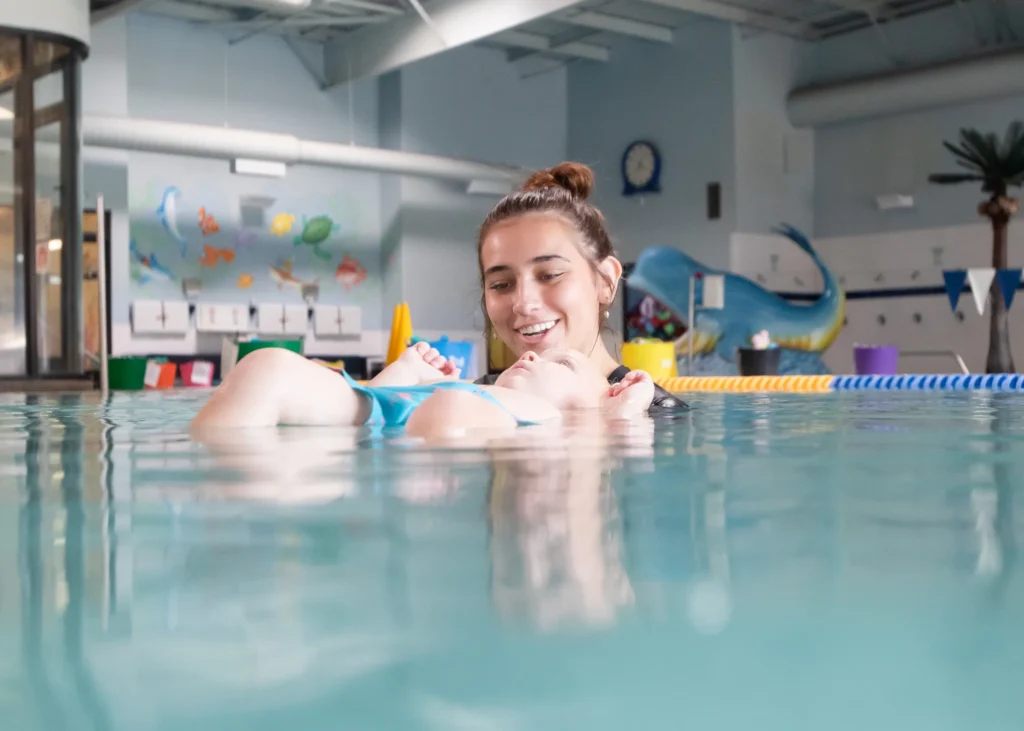
Infant survival swim lessons are designed to help babies learn how to respond if they find themselves in the water. Instead of focusing on traditional swimming skills, these lessons prioritize simple, safety-based movements.
In many cases, this means teaching babies how to float, breathe, and stay calm long enough for help to arrive. The goal isn’t independence — it’s building foundational responses.
What Skills Do Babies Actually Learn?
In infant swim lessons, babies aren’t learning to “swim” in the way older children do. Instead, they’re developing basic, reflexive safety skills.
With consistent guidance, babies can begin to recognize how their bodies move in water and respond more calmly over time.
Some of the key skills taught in infant survival swim lessons include:
- Rolling onto their back
- Floating to breathe
- Basic movement toward safety
- Becoming more comfortable in the water
These skills are introduced gradually and in ways that support your child’s development. The focus is always on building confidence, not forcing independence.
How These Lessons Are Structured
Most infant swim lessons are short and highly structured. Sessions are typically brief, allowing babies to stay engaged without becoming overwhelmed.
Repetition plays a key role. By practicing the same movements in a consistent environment, babies begin to build familiarity and confidence in the water.
This kind of structure helps create a predictable experience, which can make a big difference in how comfortable your child feels over time.
Benefits of Infant Survival Swim Lessons
When done thoughtfully, these lessons combine safety awareness with early developmental benefits.
Rather than expecting immediate results, it’s helpful to think of these lessons as building blocks. Over time, small gains can lead to meaningful progress.
Let’s take a closer look at the two main areas where families often see the biggest impact.
Water Safety and Drowning Prevention
One of the biggest reasons parents consider infant survival swim lessons is water safety. Helping your child become familiar with water early on can support safer experiences over time.
As babies are introduced to floating and breathing techniques, they may become less likely to panic if they end up in the water unexpectedly.
These lessons can contribute to safer outcomes by helping babies:
- Respond more quickly in water
- Recognize how to float and breathe
- Stay calmer in unfamiliar situations
It’s important to remember that swim lessons are just one layer of protection. Active supervision and safe environments are always essential.
Confidence and Early Development
Beyond safety, these lessons can also support your child’s overall development. Early exposure to water introduces new movements, sensations, and challenges.
As babies become more comfortable, they may begin to show increased confidence and curiosity during lessons and beyond.
This type of experience can support coordination, body awareness, and comfort in new environments. In fact, these early movement-based activities play an important role in building foundational skills.
Are Infant Survival Swim Lessons Safe?
Safety is often the first question parents ask — and it should be. The reality is that the safety of these lessons depends heavily on how they’re taught.
When programs are structured, supportive, and led by experienced instructors, they are designed with your child’s well-being in mind.
That said, not all programs follow the same approach. Understanding what to look for can help you make a more confident decision.
What Parents Should Look For in a Program
Choosing the right program is one of the most important parts of this process. A well-designed program should prioritize both safety and your child’s comfort.
When evaluating options, here are a few key things to consider:
- Certified and experienced instructors
- A warm, controlled learning environment
- Gradual, age-appropriate skill progression
- Clear and consistent safety protocols
Understanding what makes a great program can help you choose an option that maintains a positive experience for your child and your peace of mind.
Common Concerns (and What to Know)
It’s completely normal to have concerns about infant swim lessons. Some parents worry that the experience may be too intense or that their child is too young to start.
These concerns are valid, and it’s important to approach them thoughtfully. Not every program uses the same teaching style, and some may feel more aligned with your comfort level than others.
Every child is different, and their readiness can vary. Paying attention to your child’s cues — and your own comfort as a parent — can help guide your decision.
Are Infant Survival Swim Lessons Right for Your Baby?
There isn’t a one-size-fits-all answer for this question. What works well for one family may not be the best fit for another.
As you weigh your options for baby swim lessons, it can be helpful to think about your child’s personality, your goals, and how you want them to experience the water.
Signs Your Baby May Be Ready
Some babies show early signs that they may be ready to start swim lessons. You might consider your baby ready if they:
- Seem comfortable during bath time
- Show curiosity around water
- Can handle short, structured activities
- Feel supported by your presence and encouragement
Readiness looks different for every child, and it’s okay to take your time before enrolling them for classes.
When a Different Approach May Be Better
For some families, a more gradual introduction to water may feel like a better fit, such as simple water-play experiences.
These approaches can still build comfort and confidence, just at a different pace.
The ultimate goal is to grow a healthy relationship with water in a way that works best for you and your child.
Choose Safe and Supportive Infant Survival Swim Lessons at AKIM
Infant survival swim lessons can be a valuable tool for building water awareness and confidence, especially when they’re part of a safe, supportive program.
Every child is different, and there’s no need to rush the process. What matters most is creating positive, confidence-building experiences that support your child’s growth.
If you’re exploring swim lessons for your baby, we’re here for you at America’s Kids in Motion.