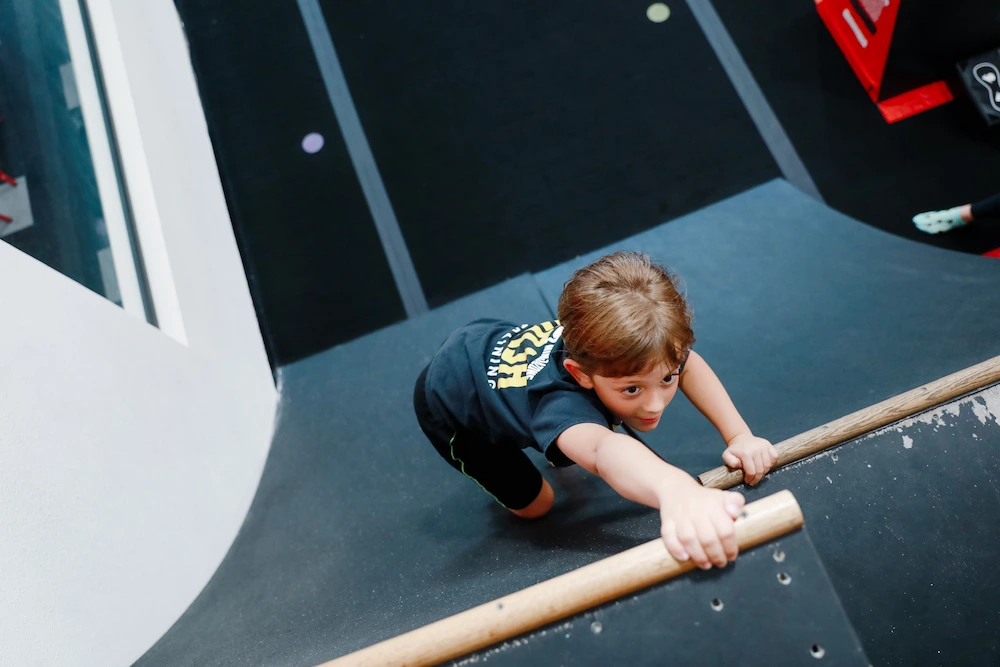


There’s something exciting about watching a child approach an obstacle they’ve never tried before. They study what’s ahead, figure out where to start, and give it their best shot. Sometimes they make it across. Other times, they discover something new to try.
A ninja warrior course for kids turns these moments into learning opportunities. Through climbing, balancing, jumping, and navigating obstacles, children practice concentrating on challenges while building strength and coordination.
And the benefits go beyond physical fitness! Let’s explore how obstacle training encourages children to think, move, and discover what they’re capable of.
How a Ninja Warrior Course for Kids Works
A ninja warrior course combines different physical obstacles into an exciting movement experience. Children work through challenges that involve climbing, swinging, balancing, jumping, and controlling their bodies in different positions.
Each obstacle introduces something new to figure out.
Crossing monkey bars requires grip strength and coordinated movements. A balance obstacle challenges children to control their steps, while a warped wall encourages them to experiment with speed and timing.
At America’s Kids In Motion, our ninja training for kids combines obstacle training with gymnastics, martial arts, and freestyle movement. These activities introduce different ways to move while encouraging children to explore their abilities.
As children progress through a course, they encounter challenges that ask them to pay attention, make decisions, and apply what they’ve learned.
Why Obstacle Training Builds Focus
Focus is often associated with sitting quietly, listening carefully, or concentrating on a single task. But children can also practice attention while they’re moving!
Think about what happens when a child approaches a balance obstacle.
They need to watch where they’re stepping, adjust their body position, and concentrate on reaching the other side. Looking away or rushing through the movement can make the challenge more difficult.
The obstacle gives them an immediate goal and a reason to stay engaged with what they’re doing.
Obstacle training creates opportunities to practice several aspects of attention:
- Following instructions: Listening to a coach and remembering how to approach a movement.
- Concentrating on a task: Paying attention to the obstacle and the movements needed to complete it.
- Remembering sequences: Keeping track of what comes next when navigating multiple challenges.
- Responding to feedback: Noticing when a movement needs adjustment and applying what they’ve learned.
These experiences are part of a larger connection between physical activity and cognitive development.
According to the CDC, regular physical activity can support children’s attention and memory, along with their physical health.
While every child’s experience is different, obstacle training offers a particularly engaging way to combine concentration with movement.
At AKIM, we believe some of the most meaningful learning happens when children actively discover something for themselves. A challenging obstacle allows them to do exactly that.
Big Moves. Big Discoveries.
Every Obstacle Brings a New Challenge!
There’s a lot happening between spotting an obstacle and making it across! Here’s how movement gets kids thinking.
Take a Look
Spot the challenge and figure out where to start.
Make a Plan
Decide how to climb, jump, swing, or balance.

Give It a Try
Put those muscles and movement skills to work!
Change It Up
Didn’t make it? Change your approach and go again.
Every attempt is an opportunity to discover something new.
Learning to Think Through Challenges
One of the most valuable parts of obstacle training is discovering that there can be different ways to approach a challenge.
Imagine a child attempting to climb a warped wall for the first time. They run toward it, reach upward, and realize they haven’t gained enough height.
What happens next?
With encouragement and guidance from a coach, they might adjust their running speed, change their timing, or approach the wall with a different technique.
Now they’re experimenting with a solution!
This process encourages children to think about their movements instead of simply repeating the same attempt.
They begin practicing how to:
- Recognize what made a movement difficult.
- Consider a different approach.
- Apply feedback from an instructor.
- Keep practicing as their skills develop.
They also learn that a challenge might take several attempts. Children don’t have to complete every obstacle immediately to benefit from the experience. Sometimes the most meaningful progress happens when they recognize what needs to change and try again.
Building Strength, Balance, and Coordination
Of course, all that thinking comes with plenty of movement!
A ninja course for kids challenges different muscle groups and movement skills as children navigate obstacles. Each activity offers opportunities to develop physical abilities that support their progress.
Three important areas include:
- Strength: Climbing, hanging, and supporting body weight help children build the muscles they need to navigate obstacles.
- Balance: Moving across narrow surfaces encourages stability, posture, and controlled movements.
- Coordination: Jumping, swinging, and transitioning between obstacles require different parts of the body to work together.
These skills become especially valuable when children begin combining movements.
For example, successfully navigating a series of obstacles might require a child to jump, land with control, regain their balance, and immediately prepare for the next movement.
As their physical abilities develop, children may discover new ways to approach challenges that previously seemed difficult. That connection between movement and discovery is part of what makes obstacle training so engaging.
What Makes a Great Kids Ninja Program?
The right ninja program should give children opportunities to explore new movements while receiving the instruction and encouragement they need to progress.
When comparing classes, we encourage parents to look beyond the obstacles themselves.
A course filled with exciting equipment can capture a child’s attention, but the learning experience depends on how coaches introduce and teach those challenges.
Here are three things worth looking for:
- Progressive skill development: Children should have opportunities to practice foundational movements before advancing to more challenging obstacles.
- Supportive coaching: Instructors should provide clear guidance, constructive feedback, and encouragement as children learn.
- Opportunities to practice: A strong program allows children to revisit challenges, refine their techniques, and recognize their progress.
It’s also worth asking how instructors accommodate different experience levels. Some children may be eager to attempt every obstacle, while others prefer more time to become comfortable with unfamiliar movements.
A thoughtful program recognizes those differences and creates opportunities for each child to participate and grow.
Explore NinjaZone at America’s Kids In Motion
At America’s Kids In Motion, we believe children discover what they’re capable of through movement, exploration, and meaningful challenges.
Our NinjaZone program combines obstacle training, gymnastics, martial arts, and freestyle movement in an exciting environment where children can build physical skills while practicing focus, problem-solving, and persistence.
Ready to introduce your child to a new adventure? Explore our NinjaZone classes at America’s Kids In Motion and discover how obstacle training can make learning active and rewarding!