




Once your child gets more involved in gymnastics, you start hearing a lot of numbers. Level 3. Level 5. Level 8. But what do those gymnastics levels actually tell you about what your child is learning?
Competitive gymnastics levels create a progression of skills and expectations. Our Excel Gymnastics programs at America’s Kids In Motion help school-age kids 6+ develop as gymnasts across USA Gymnastics (USAG) Levels 1–8.
Here’s what that progression actually looks like, and what you can expect to see your gymnast doing along the way.
How Do Competitive Gymnastics Levels Work?
Within the USAG Development Program, Levels 1–3 are developmental, Levels 4–5 are compulsory, and Levels 6–10 are optional. Excel’s competitive pathway currently extends through Level 8.
Compulsory gymnastics means athletes at the same level perform prescribed routines. Because gymnasts are performing the same required material, coaches and judges can pay close attention to how well foundational skills are executed.
At optional levels, routines become individualized. But “optional” doesn’t mean anything goes. Gymnasts still have specific requirements they must meet on vault, uneven bars, balance beam, and floor exercise.
That distinction becomes easier to understand once you see what kids are actually learning.
Levels 1–3: Building the Foundation
Levels 1–3 develop the fundamental movements that later form the foundation of competitive gymnastics. Depending on the program, USAG allows these levels to serve as achievement, pre-team, or introductory competitive levels.
Level 1: Learning the Building Blocks
When kids start working through Level 1, the skills can look pretty simple from the sidelines. But as coaches, we know a strong handstand, controlled landing, or steady movement across the beam is doing important work.
At this level, you may see your gymnast working on movements such as:
- Vault: Introductory handstand and vault-shape work
- Bars: Pullovers, casts, and basic bar movement
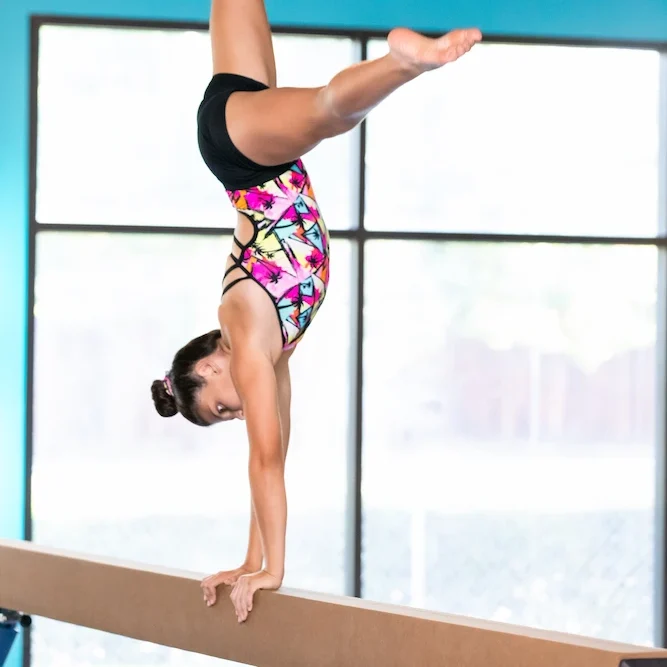
- Beam: Balances, jumps, and controlled movement
- Floor: Rolls, handstands, and cartwheel development
Those basic shapes and movements will show up again in vaulting, tumbling, beam skills, and more advanced gymnastics.
Level 2: Adding Skills and Consistency
Level 2 is where we start asking kids to build on that foundation. A skill they were excited to accomplish for the first time in Level 1 now needs to become something they can repeat with greater control.
Young gymnasts may work on:
- Vault: Handstand-to-flat-back development
- Bars: Glide swings, pullovers, casts, and back hip circles
- Beam: More developed balances, jumps, and turns
- Floor: Handstands, cartwheels, backward rolls, and flexibility work
Repetition matters here. Being able to perform a skill consistently is part of what prepares a gymnast to connect it with more difficult movements later.
Level 3: Preparing for the Competitive Transition
By Level 3, parents often start recognizing more of the gymnastics they’ve seen at meets. The building blocks begin coming together into bigger skills and connected movement.
You may see your child perform the following movements:
- Vault: More developed handstand-flat-back work
- Bars: Front hip circles and increasingly connected bar skills
- Beam: Handstand and cartwheel work
- Floor: Roundoffs and back-handspring development
The minimum competition age for Level 3 is 6. That establishes eligibility, but it doesn’t mean every 6-year-old gymnast belongs at Level 3.
Levels 4–5: Compulsory Competitive Gymnastics
At Levels 4 and 5, gymnasts compete in prescribed routines. This is where the details parents have watched coaches reinforce — straight legs, body position, rhythm, control, and landings — become especially important.
Level 4: Entering the Compulsory Program
This stage is when competitive gymnastics starts to feel very real for families. Gymnasts are putting individual skills together into routines and performing them against a shared standard.
Level 4 routines include movements such as:
- Vault: Front handspring vault
- Bars: Kips, casts, and circling skills
- Beam: Handstands, cartwheels, leaps, and turns
- Floor: Front and backward tumbling, leaps, and turns
In Level 4, the minimum competition age is 7. At this stage, simply completing a skill isn’t the whole goal. How the gymnast performs it matters, too.
Level 5: Strengthening the Competitive Foundation
Level 5 is one of those stages where patience with the fundamentals really starts paying off. Routines are still compulsory, but gymnasts are asked to bring more strength, control, and consistency to increasingly difficult skills.
As a parent, you’ll see the following progression at this level:
- Vault: Continued front-handspring vault development
- Bars: More advanced circling work and a salto-style dismount
- Beam: More developed acrobatics, dance, and dismount work
- Floor: More demanding tumbling, including salto development
Our team at AKIM wants all of our competitive gymnasts to master this foundation so they’re prepared to transition into optional gymnastics.
Levels 6–8: Moving Into Optional Gymnastics
Beginning at Level 6, routines can become more individualized while still meeting USAG requirements. Skills also have difficulty classifications, such as A, B, and C, which help determine what athletes can and must include as they advance.
Level 6: The First Optional Level
This competitive stage brings a change that many gymnasts and parents get excited about. There’s more room to build routines around the athlete, but there are still plenty of requirements to meet.
Requirements within these optional routines include:
- Bars: Cast, bar-change, circling, and salto-dismount requirements
- Beam: Acrobatics, a leap or jump, a full turn, and an aerial or salto dismount
- Floor: Acrobatic work with salto elements, plus dance and turning requirements
- Vault: Approved Level 6 vault progressions
This is where “optional” starts to make sense. Your gymnast has more individuality without losing the structure that underpins competitive progression.
Level 7: Building Greater Difficulty and Independence
At Level 7, it isn’t just about whether your gymnast can do a harder skill. We’re looking at how athletes connect skills and perform them successfully as part of a complete routine.
Requirements step up through elements such as:
- Bars: More advanced casting and multiple clear circling elements
- Beam: An acrobatic series and flight element
- Floor: Multiple tumbling passes with forward and backward salto work
- Vault: Approved Level 7 vault progressions
Gymnasts are increasingly taking skills they’ve practiced separately and learning how to bring those pieces together.
Level 8: Advancing Within Excel’s Competitive Pathway
Routines in Level 8 are where you can really see how those earlier building blocks have grown into advanced gymnastics.
Parents can expect requirements including:
- Bars: Handstand work, flight or turning elements, clear circling, and a salto dismount
- Beam: An acrobatic flight series, dance elements, turns, and an aerial or salto dismount
- Floor: Multiple saltos, connected tumbling, and required dance elements
- Vault: A broader range of approved competitive vaults
Level 8 is the highest Development Program level we currently offer at America’s Kids In Motion, although the national USAG program continues through Levels 9 and 10.
How Does a Gymnast Move Up a Level?
At applicable competitive levels, USAG has formal mobility requirements, including required all-around scores for advancement.
But being eligible to move up and being prepared for everything the next level requires aren’t always the same thing. As coaches, we’re also looking at consistency, technique, skill readiness, preparation, and how a gymnast responds to corrections.
Competitive gymnastics isn’t a race through the numbers. We want the skills underneath that number to be ready for what comes next.
Helping Your Gymnast Take the Next Step With Excel Gymnastics at AKIM!
At Excel Gymnastics, we work with school-age gymnasts 6+ across USAG Levels 1–8, helping kids build from foundational movements into increasingly challenging competitive gymnastics. Along the way, there are plenty of opportunities for practice, discovery, and those memorable “I DID IT!” moments that make the work worthwhile.
If your child is interested in competitive gymnastics, connect with our Excel Gymnastics team today! We’d love to answer your questions and help you understand what the next step could look like.