




As the school year rolls around, we often help parents answer the same question: “Should we choose preschool or Transitional Kindergarten?”
It’s an understandable question. California’s Universal Transitional Kindergarten program has given families more options than ever before, but it has also created more decisions to make.
One thing we often tell parents is that this isn’t really a question about preschool vs TK.
It’s a question about where your child will spend their days asking questions, solving problems, building friendships, moving through new experiences, and discovering what they are capable of.
What Is Transitional Kindergarten (TK)?
Transitional Kindergarten, often called TK, is part of California’s Universal PreKindergarten initiative. It was created as a bridge between preschool and kindergarten, giving young children an additional year of learning before entering kindergarten.
TK is typically offered through public school districts. As California expands Universal TK, more four-year-olds are becoming eligible, which is why so many parents are now comparing it with private preschool.
Although both programs serve kids who are about ready for school, they were created with different goals:
- Preschool often focuses on exploration, play, movement, social growth, and the foundations of early learning.
- TK introduces children to a public school environment with kindergarten-aligned expectations.
- Preschool programs can vary widely in philosophy, schedule, and classroom style.
- TK is part of the public school system and generally follows district requirements.
The differences don’t make one option automatically better. It simply means parents should look beyond the label and ask what the child’s day will actually feel like.
Preschool vs TK: What Are the Biggest Differences?
When families compare preschool vs TK, they often start with age, cost, or eligibility. Those things matter, but they do not tell the whole story.
In our experience, the more helpful question is: What kind of learning experience will my child have every day?
Learning Philosophy
Parents sometimes picture “learning” as sitting at a table, practicing letters or numbers. We understand why. For many adults, that’s what school looked like when they were growing up.
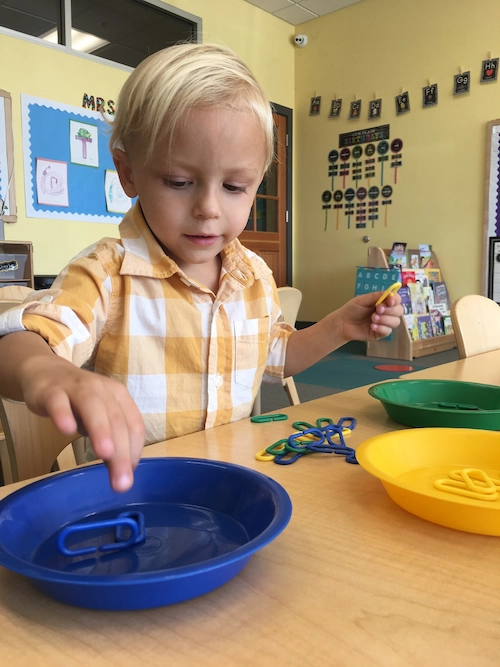
One thing we’ve learned after years of working with young children is that they don’t wake up wondering whether they’ll practice literacy or math today. They wake up wondering what they’ll get to build, climb, pretend, discover, and explore.
We’ve watched children spend 20 minutes figuring out how to balance on a beam after falling off three times. We’ve seen a simple block tower turn into conversations about gravity, teamwork, and trying again after it falls over.
That’s why, when comparing preschool and TK, we encourage families to look beyond the daily schedule or curriculum. Pay attention to how children are invited to learn.
TK can also include play-based learning, but it is usually connected to a more structured public school setting and kindergarten preparation model.
Daily Schedule and Classroom Environment
Another important difference between TK and preschool is the rhythm of the day.
Many private preschools offer more flexibility in schedule, classroom flow, and learning style. Some children benefit from that extra room to move, explore, repeat activities, and ease into group learning at their own pace.
TK often gives children an early experience with elementary school routines.
For some children, that structure feels exciting. For others, another year in a preschool setting may give them more time to build comfort, independence, and joy in learning before kindergarten.
Social and Emotional Development
Both preschool and TK can help children build relationships, practice sharing, and learn how to participate in a classroom community. The difference often comes down to how those skills are practiced.
One thing we encourage families to watch during a school tour is how children interact throughout the day.
When visiting a preschool or TK classroom, ask yourself questions like:
- Are children actively exploring their environment?
- Do teachers encourage curiosity and conversation?
- Is movement naturally part of the day?
- Are children given chances to solve problems?
- Do children seem joyful, involved, and proud of what they are doing?
Those small moments matter. They show you what children are experiencing, not just what the program promises.
Is Free Universal TK Always the Best Option?
Universal TK is a good option for many California families, especially because it is publicly funded. For some families, that makes it the right choice.
But we also encourage parents not to base their decision solely on tuition price. A free program may be valuable, but the best learning environment is still the one that fits your child, your family, and the experience you want your child to have before kindergarten.
Miss H has made my kids’ education experience truly magical. She personalizes her teaching approach so easily and has gone above and beyond by also supporting my needs as a parent. My children adore school and love learning because of Miss H’s early influence. Each of my family members that have interacted with Miss H, during pick up and drop off, will go out of his or her way to let me know how fortunate my kids are to have Miss H as their teacher. My sister also recently switched her career paths to teaching because of how moved she was by Miss H. I also notice all the students eagerly stand in line with huge smiles each morning as they impatiently wait to be greeted by Miss H prior to entering her classroom. My children and my family love and appreciate Miss H so much. May God continue to bless Miss H so she may continue to impact many more families. – Christian B
While TK often feels more structured and school-like, options like the Campus Preschool at AKIM feel more creative and movement-rich. Both may be caring environments, but they support children in different ways.
How to Choose Between Preschool and TK
Choosing between preschool and TK isn’t a simple decision, and it really comes down to how your child learns.
Some are ready and excited for the structure of TK. Others may benefit from another year in a preschool environment where they can move, explore, create, build relationships, and strengthen their love of learning before entering kindergarten.
We often remind families to ask more questions than, “Which program is better?”
Instead, consider these questions:
- What kind of learner is my child?
- Which classroom environment feels most engaging?
- What experiences do I want them to have before kindergarten?
- How much flexibility does our family need?
- Which educational philosophy feels most aligned with how we want our child to learn?
Finding the Right Beginning for Your Child
California’s Universal TK program has opened the door for more families to access early education. At the same time, private preschool offers an option for families who want a more flexible, discovery-driven environment before kindergarten.
That’s one of the reasons we built The Campus Preschool the way we did. We wanted children to experience a place where they feel excited to ask questions, try new things, solve problems, and celebrate those proud “I DID IT!” moments.
Movement, curiosity, academics, creativity, and exploration aren’t separate parts of the day. They’re woven together into every experience.
Contact us to schedule a Campus Preschool tour and experience our learning environment for yourself!